by LEIGH JERRARD, Houzz, March 20, 2014
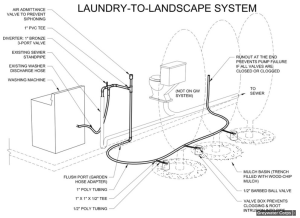
Laundry-to-Landscape System
Image: Greywater Corps
Source: www.houzz.com
You’re probably irrigating your yard with drinking water, since the same water that comes out of your kitchen faucet also comes out of your hose bibs. But do your plants need drinking water? It turns out that most plants are perfectly happy with gently used water from showers, bathtubs, laundry and sinks — or greywater (also “graywater”). This works out well, because the average American household uses about half its water indoors and the other half outside for irrigation. Some households can cut their water bills almost in half by irrigating with greywater.
Now that large swaths of the country are facing historic drought conditions — and the possibility that these droughts are the new normal — it especially doesn’t make sense to send usable water down the drain. You can recapture that water and use it again. There are other benefits to greywater, too. It reduces a home’s carbon footprint, since moving and treating water consumes a tremendous amount of power. It protects the aquatic ecosystems from whence your water comes. It reduces loads on sewage systems (which lowers the carbon footprint) and puts water back into the local aquifer, which is better than dumping it into rivers, lakes and oceans. If you’re on a septic tank, it reduces loads on the system, prolonging your service intervals. And it helps grow a beautiful and bountiful garden.
Greywater systems don’t look like normal irrigation. For one thing, there’s stuff in it — small amounts of soap, hair, laundry lint etc. You can either process the water and try to filter everything out, or you can use larger pipes and emitters and send the water to your garden as is. The latter is the better option — ideally, a greywater system should be low tech and dependable, with a minimum of parts to break and filters to maintain.