From the Blog

Rooftop farm produces up to 10 times more than traditional farms

by EILEEN POH, Channel NewsAsia, February 14, 2014

Comcrop is a vegetable and fish farm located on the rooftop of *SCAPE. (Photo: Photo: Comcrop Source: www.channelnewsasia.com

Comcrop is a vegetable and fish farm located on the rooftop of *SCAPE.
Photo: Comcrop
Source: www.channelnewsasia.com

Tucked away in the heart of Orchard Road is a vegetable and fish farm called Comcrop located on the rooftop of *SCAPE. With 6,000 square feet of space, it can produce eight to 10 times more than traditional farms over the same area by using vertical farming techniques.
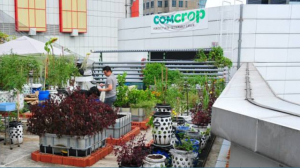
Tucked away in the heart of Orchard Road is a uncommon sight for Singapore’s main shopping belt.

A vegetable and fish farm called Comcrop is located on the rooftop of *SCAPE.

With 6,000 square feet of space, it can produce eight to 10 times more than traditional farms over the same area by using vertical farming techniques.

The farm also uses aquaponics, a self-sustaining system that breaks down by-products from tilapia, a type of fish, which are utilised by plants as nutrients. The clean water is then fed back to the plants.
[Read more…]

Brooklyn Grange – A New York growing season

from CHRISTOPHER ST. JOHN, Vimeo, February 9, 2014

A 7-month time lapse documenting the first full growing season at the Brooklyn Grange’s farm in the Brooklyn Navy Yard. At 65,000 square feet, it’s the largest rooftop farm in the world.

Shot and edited by Christopher St. John

View original post

Link to the Brooklyn Grange


Urban adaptation can roll back warming of emerging megapolitan regions

by MATEI GEORGESCU, PHILIP E. MOREFIELD, BRITTA G. BIERWAGEN and CHRISTOPHER P. WEAVER, Proceedings of the National Academy of the United States of America, Early Edition

Edited by Susan Hanson, Clark University, Worcester, MA, and approved January 15, 2014 (received for review November 27, 2013)

Significance

Conversion to urban landforms has consequences for regional climate and the many inhabitants living within the built environment. The purpose of our investigation was to explore hydroclimatic impacts of 21st century urban expansion across the United States and examine the efficacy of commonly proposed urban adaptation strategies in context of long-term global climate change. We show that, in the absence of any adaptive urban design, urban expansion across the United States imparts warming over large regional swaths of the country that is a significant fraction of anticipated temperature increases resulting from greenhouse gas-induced warming. Adapting to urban-induced climate change is geographically dependent, and the robust analysis that we present offers insights into optimal approaches and anticipated tradeoffs associated with varying expansion pathways.

Abstract

Modeling results incorporating several distinct urban expansion futures for the United States in 2100 show that, in the absence of any adaptive urban design, megapolitan expansion, alone and separate from greenhouse gas-induced forcing, can be expected to raise near-surface temperatures 1–2 °C not just at the scale of individual cities but over large regional swaths of the country. This warming is a significant fraction of the 21st century greenhouse gas-induced climate change simulated by global climate models. Using a suite of regional climate simulations, we assessed the efficacy of commonly proposed urban adaptation strategies, such as green, cool roof, and hybrid approaches, to ameliorate the warming. Our results quantify how judicious choices in urban planning and design cannot only counteract the climatological impacts of the urban expansion itself but also, can, in fact, even offset a significant percentage of future greenhouse warming over large scales. Our results also reveal tradeoffs among different adaptation options for some regions, showing the need for geographically appropriate strategies rather than one size fits all solutions.

Matei Georgescu, doi: 10.1073/pnas.1322280111

Freely available online through the PNAS open access option.

Read the full article

Eco-City eco-citizen approach: “The right to live in a healthy and safe environment”

by KRISTIN MILLER, Ecocity Emerging (e-newsletter of Ecocity Builders), February 2014

Greetings!

I recently participated in a lively and well-organized student-run conference on the environment and human rights at Northwestern University in Chicago.

The students wanted to demonstrate that the right to live in a healthy and safe environment, free from harm to air, water, and soil, are intricately intertwined with pressing social and economic rights. They see the right to a healthy environment as a fundamental right that precedes all the others.

We focused on the human aspect of climate change, pollution and declining resources. We heard from well-known activists and changemakers, including Winona LaDuke, American Indian activist and two time US vice presidential candidate on the Green Party ticket, and Njoki Njoroge Njhu, grassroots organizer, ecological activist and women’s advocate from Nairobi, Kenya.

I was on a panel exploring solutions at grassroots and institutional levels. I shared the stage with Vu Thi Bich Hop, Executive Director for the Center for Sustainable Rural Development in Vietnam, and Alaka Wali, curator of North American Anthropology in the Science and Education Division at The Field Museum in Chicago where she works through a participatory action research model in neighborhoods throughout Chicago. My presentation focused on eco-citizenship and our rights and responsibilities as beneficiaries of Nature’s ecosystem services and society’s socio-cultural offerings and opportunities.

By the end of the conference, Vu Thi Bich Hop, Alaka Wali and I had become friends and collaborators. Alaka Wali’s participatory action research framework is a perfect fit for the EcoCitizen World Map Project. And so Ecocity Builders and The Field Museum are now working together to deepen each other’s impact by sharing resources and information.

I tell this story because it shows in a very simple way the power of forming positive relationships and sharing. When information and resources are shared, the value of goods and services can be increased, for the business, for individuals and for the community.

[Read more…]

Bosco Verticale : The world’s first vertical forest nears completion in Milan

by DIANE PHAM, Inhabitat.com, January 25, 2014

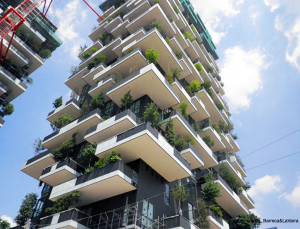
Boeri Studio's Bosco Verticale vertical forest is nearing completion in Milan Photo: Barreca & LaVarra Source: www.inhabitat.com

Boeri Studio’s Bosco Verticale vertical forest is nearing completion in Milan
Photo: Barreca & LaVarra
Source: www.inhabitat.com

Back in 2011 we reported on the Bosco Verticale — a new superstructure designed to bring the world’s first vertical forest to Milan, Italy. While many were skeptical when it came to the feasibility of construction, Boeri Studio reports that the structure is certainly more than just a fantasy — in fact it’s well on its way to being completed this year. The project’s two towers have already reached full height, and since April of 2012, teams have been installing trees on the structure. Though construction has slowed due to rain and snowfall in Milan over the last couple months, things are anticipated to kick up again very soon to meet the late 2013 opening.

Milan is one of the most polluted cities in the world, and the Bosco Verticale project aims to mitigate some of the environmental damage that has been inflicted upon the city by urbanization. The design is made up of two high-density tower blocks with integrated photovoltaic energy systems and trees and vegetation planted on the facade. The plants help capture CO2 and dust in the air, reduce the need to mechanically heat and cool the tower’s apartments, and help mitigate the area’s urban heat island effect – particularly during the summer when temperatures can reach over 100 degrees.

[Read more…]

High-rise urban farming

by AFP Relaxnews, The Star Online, January 13, 2014

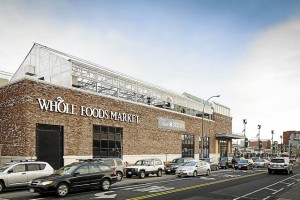
Rooftop farming at Whole Foods Market in Brooklyn Photo: Gotham-Greens / AFP Source: www.thestar.com.my

Rooftop farming at Whole Foods Market in Brooklyn
Photo: Gotham-Greens / AFP
Source: www.thestar.com.my

Agriculture reaches for the skies in New York’s pioneering commercial greenhouse atop a supermarket.

Will supermarkets soon be growing their own produce on the roof? It might sound unusual, but it could be the future of the food commerce industry as the urban farming trend goes high-rise and spreads to metropolises all over the world.

One of the latest companies to test out the concept is global chain Whole Foods, which opened its first Brooklyn location Third and 3rd last month, featuring a 20,000-square foot (about 1,860sq m) greenhouse on the roof.

Designed, built and operated by urban agricultural specialist Gotham Greens, the project is thought to be the first commercial-sized greenhouse integrated into a supermarket.

The greenhouse will produce over 200 tonnes of fresh produce, including leafy greens and tomatoes, per year, and recirculating irrigation systems will capture water for re-use. It is the second New York construction by Gotham Greens, following a 15,000-square foot (about 1,400sq m) rooftop greenhouse built by the company in 2010.

[Read more…]