From the Blog

Edible algae — coming to a rooftop near you?

by AFP, August 27, 2013

Fresh spirulina paste being put into jars in Bangkok.  Photo: AFP Source: www.news.com.au

Jars of fresh spirulina paste, Bangkok
Photo: AFP
Source: www.news.com.au

On a hotel rooftop in Bangkok, dozens of barrels of green liquid bubble under the sun — the latest innovation in urban farming. It may not look like it, but this green goo is an algae called spirulina — a rich source of protein, antioxidants and nutrients.
Watch the video


Des façades d’algues pour réduire la consommation d’énergie primaire des bâtiments

par Innovation produits, lemoniteur.fr, 20 août 2013

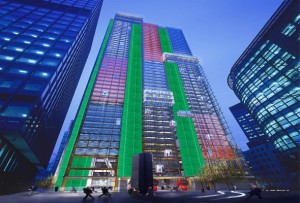
Le projet Enneys est un système de micro algues producteur de biomasse et nettoyant des eaux usées Image: Ennesys Source: www.lemoniteur.fr

Le projet Enneys est un système de micro algues producteur de biomasse et nettoyant des eaux usées
Image: Ennesys
Source: www.lemoniteur.fr

Les « photobioréacteurs » d’Ennesys ont été retenus par Paris Région Lab dans le cadre du deuxième appel à projets « Efficacité énergétique des bâtiments ».

Dans un “photoréacteur”, sorte d’aquarium en plastique rempli d’un liquide de couleur verte, circule hermétiquement un mélange de déchets (eaux souillées de toilettes ou “jus de poubelle” venu des décharges) que dévorent d’infimes algues en se reproduisant à grande vitesse par photosynthèse sous l’effet de la lumière.

En recouvrant de grands bâtiments de ces “photoréacteurs”, Ennesys assure pouvoir réduire d’au moins 80% leur consommation d’énergie dite primaire (hors occupants) et de 80% leur consommation en eau. “Les algues ont à peu près la même valeur énergétique que le charbon”, précise Jean-Louis Kindler, directeur scientifique. “D’ailleurs une grande partie du pétrole qu’on découvre aujourd’hui, ce sont des algues fossilisées.”

[Read more…]

Retour d’expérience d’une surélévation en ossature bois

par HUBERT D’ERCEVILLE, lemoniteur.fr, 3 septembre 2013

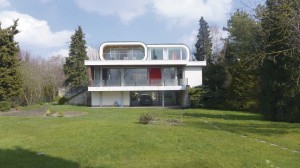
Maison Cabanne Vaux-sur-Seine Photo: HdE Source: www.lemoniteur.com

Maison Cabanne Vaux-sur-Seine
Photo: HdE
Source: www.lemoniteur.fr

Si la maison d’architecte, conçue il y a 50 ans, ne présente aucun désordre, ni fissuration, son extension en ossature bois a connu une mise en œuvre problématique, dont les premières malfaçons commencent à apparaître.

Programme – une construction cohérente architecturalement

Cette belle maison, dessinée par Alain-Michel Cabanne, s’inspire de la modernité des années soixante, aux États-Unis. En 1964, c’était une de ses premières commandes. Il l’a réalisée dans un esprit très américain, avec de larges baies vitrées, de grosses dalles noires au sol, un escalier extérieur. Structurellement, elle est construite sur pilotis en raison du caractère inondable du terrain situé sur l’île de Vaux, en bord de Seine (78).

Le bâti repose sur une trame de sept poteaux en béton armé, réalisés par coffrage. Avec une bizarrerie : la trame est régulière, sauf à l’ouest, où pour des raisons d’architecture intérieure, il manque un poteau. Dans ce coin, les façades et la toiture sont donc en porte-à-faux. Au rez-de-jardin, l’assemblage est contreventé par plusieurs murs, dont le support de cheminée. Cet espace, conçu pour être étanche, regroupe quelques locaux de services et le bloc technique.

Tous les lieux de vie sont à l’étage. Les intérieurs sont en parement de bois. Curiosité : le plafond est recouvert à 50 cm par un plénum qui abrite un réseau de chauffage par air pulsé. L’ensemble reste très résistant, puisque après 49 ans, la structure ne souffre d’aucune fissure, ni ruptures ou tassement.

En 2009, les propriétaires ont souhaité réaliser une extension de type penthouse, avec une chambre et une salle de bains, un dressing et une terrasse. Mais comme la réglementation en vigueur sur l’île interdit toute extension de l’emprise au sol, seule la surélévation était envisageable. La hauteur maximale autorisée de 9 mètres est suffisante, puisque la toiture d’origine ne dépasse pas les 6 mètres.

[Read more…]

In Japan, new policy spurs solar power boom

by Chico Harlan, The Washington Post, June 4, 2013

TOKYO — Across Japan, technology firms and private investors are racing to install devices that until recently they had little interest in: solar panels. Massive solar parks are popping up by the dozen, and companies are mounting panels atop warehouse and factory rooftops as part of a rapid buildup that one developer likened to an “explosion.”

The boom is striking in part because of how simply it was sparked — by a little-noted government policy, implemented nearly a year ago, that suddenly guaranteed generous payments to anybody selling renewable energy, including solar power.

Because of that policy, known as a feed-in tariff, Japan has become one of the world’s fastest-growing users of solar energy, investors and analysts say, a shift that comes as this resource-poor country tries to find clean and homegrown alternatives to nuclear power. This year alone, Japan is forecast to install solar panels with the capacity of five to seven modern nuclear reactors.

Before the 2011 meltdowns at the Fukushima Daiichi plant, Japan had all but neglected renewable forms of energy, instead emphasizing atomic power, which it hoped would provide half of the nation’s energy by 2030. But the accident at Fukushima forced the shuttering of the country’s 50 operable reactors, only two of which have been restarted. The remaining shutdowns could prove temporary, with Prime Minister Shinzo Abe pledging restarts of reactors deemed safe. A majority of Japanese, though, remain opposed to atomic energy, and analysts say the solar takeoff highlights Japan’s appetite for other options.

There is a downside: Renewables are several times pricier than nuclear power or fossil fuels such as coal, oil and gas. The rising use of solar power means energy bills will spike, potentially complicating Abe’s plan to jump-start Japan’s long-foundering economy.

Most consumers think that sacrifice is worthwhile, and they say nuclear power has hidden cleanup and compensation costs that emerge only after an accident. Fossil fuels, meanwhile, release harmful greenhouse gases and must be imported from Australia, Russia, Indonesia and the Middle East. […]

Read the original story


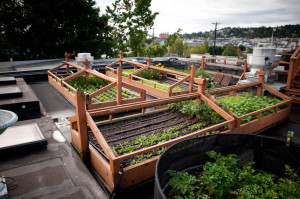
Bastille’s booming blooming rooftop garden

by MELISSA PETERMAN, Eater Seattle, July 11, 2013

Photo: Geoffrey Smith/LookatLao Studio Source: www.seattle.eater.com

Photo: Geoffrey Smith/LookatLao Studio
Source: www.seattle.eater.com

Welcome back to Up on the Rooftop, a monthly column by Seattle Slow Food board member and writer Melissa Peterman, who gets up close and personal with Seattle’s mile-high club in the form of (mostly) rooftop gardens.

With the incredible spring weather we had, and what’s shaping up to be a summer to match, diners can expect to see more rooftop garden produce taking center stage on Seattle menus. This month, we talk to Jason Stoneburner about how things have been progressing with his rooftop garden at Bastille and what he’s most excited about this summer (like, those awesome rooftop dinners). It should be noted that at the time of this interview, Stoneburner had not yet opened, but chef Jason says that he is definitely sharing produce from Bastille’s rooftop garden with his namesake restaurant, especially when it’s in full-swing like it is right now.

[Read more…]

New Seasons Market roof now home to bee colonies

by STOVER E. HARGER III, The Columbian, July 10, 2013

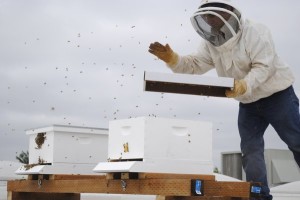
Portland beekeeper Damian Magista taps a container on July 8 to persuade thousands of honey bees to enter their new home on the roof of the Fisher's Landing New Seasons Market Photo: Stover E. Harger III Source: www.columbian.com

Portland beekeeper Damian Magista taps a container on July 8 to persuade thousands of honey bees to enter their new home on the roof of the Fisher’s Landing New Seasons Market
Photo: Stover E. Harger III
Source: www.columbian.com

Honey, they’re home.

Two honeybee colonies — made up of nearly 50,000 pollinators — now live on the roof of the Fisher’s Landing New Seasons Market, part of the regional chain’s new “Bee Part of the Solution” campaign. The company did the same in April at its store in Happy Valley, Ore.

The goal is not only to provide the bees with a safe place to raise their brood and make honey, but spark further dialogue on the precarious plight of the important insects. By next spring, the rooftop bees’ ranks could grow to more than 120,000.

The Portland beekeeper who was hired to help kick-start the campaign said it might just raise awareness about dwindling bee populations and ongoing threats to their survival, such as pesticides, parasites and disease.

“A piece like this is a great way to start that conversation,” said Damian Magista, owner of honey company Bee Local.

[Read more…]