From the Blog

A building not just green, but practically self-sustaining

by BRYN NELSON, The New York Times, April 2, 2013
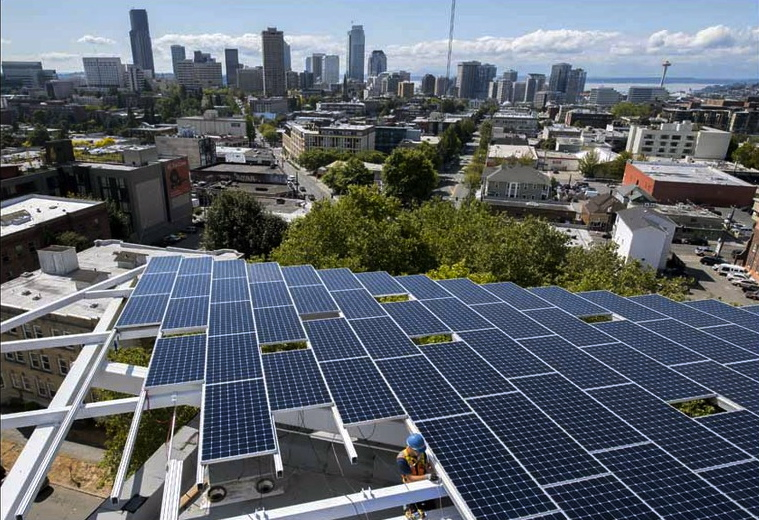
Solar roof under construction Photo: John Stamets Source: www.bullitcenter.org

Solar roof under construction
Photo: John Stamets
Source: www.bullitcenter.org

SEATTLE — When an office building here that bills itself as the world’s greenest officially opens later this month, it will present itself as a “living building zoo,” with docents leading tours and smartphone-wielding tourists able to scan bar codes to learn about the artfully exposed mechanical and electrical systems.

Tenants have already begun moving into the six-story Bullitt Center, in advance of its grand opening on Earth Day, April 22. With the final touches nearly complete on the 50,000-square-foot office building at 1501 East Madison Street, at the edge of the city’s Capitol Hill neighborhood, its occupants are about to embark upon an unparalleled — and very public — experiment in sustainability.

Once settled in, they will be guinea pigs in a $30 million living laboratory distinguished by its composting toilets, strict energy and water budgets and a conspicuous lack of on-site parking. To earn its environmental bragging rights, the Bullitt Center must complete a rigorous one-year certification process called the Living Building Challenge, which requires both water and energy self-sufficiency, among a list of 20 demands.

Provided that the building clears a few remaining regulatory hurdles, all its water will be supplied by rainwater collected in a 56,000-gallon cistern before being filtered and disinfected. A rooftop array of photovoltaic panels, extending beyond the building like the brim of a graduation mortarboard, will produce an estimated 230,000 kilowatt-hours a year, hopefully just enough to break even for a building that is 83 percent more efficient than the city’s typical commercial site. […]

Read the original story

Slide show

From Bullitt Center website:


Google’s new built-from-scratch Googleplex

by PAUL GOLDBERGER, Vanity Fair, February 22, 2013

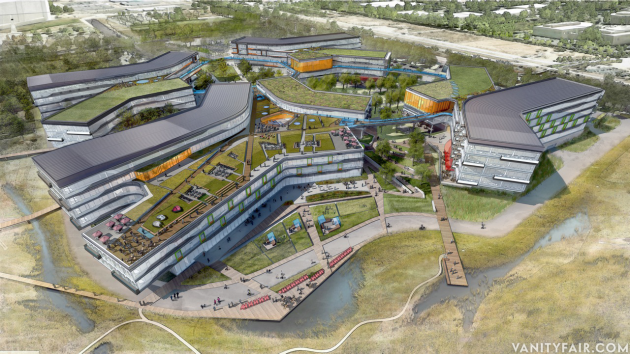
New "Googleplex" headquarters Image: NBBJ Source: www.vanityfair.com

New “Googleplex” headquarters
Image: NBBJ
Source: www.vanityfair.com

Google occupies some of the most famous offices in the world—think cafés everywhere you look, treadmills with laptops attached to them, pool tables and bowling alleys, green buildings, and vegetable gardens—but not one of the places in which the company’s 35,000+ employees work has been built by the company. The core of the “Googleplex,” as the headquarters in Mountain View, California, is generally known, consists of a suburban office park once occupied by Silicon Graphics that Google remodeled to suit its needs; in New York, Google occupies (and owns) the enormous former Port Authority headquarters in Chelsea. The company has been similarly opportunistic around the world, taking over existing real estate and, well, Google-izing it. “We’ve been the world’s best hermit crabs: we’ve found other people’s shells, and we’ve improved them,” David Radcliffe, a civil engineer who oversees the company’s real estate, said to me. Under Radcliffe, the company’s home base in Mountain View has expanded to roughly 65 buildings.

For the last year or two, Google has been toying with taking the plunge and building something from scratch. In 2011 it went so far as to hire the German architect Christophe Ingenhoven to design a brand new, super-green structure on a site next to the Googleplex, but that was a false start: the company abandoned the project a year later, when it decided to build in another part of Mountain View, closer to San Francisco Bay, and went looking for another architect. Now Google has partnered with the Seattle-based firm NBBJ, a somewhat more conventional choice. And the renderings of the new project, which Google has made available to Vanity Fair, show something that looks, at first glance, like an updated version of one of the many suburban office parks that Google has made a practice of taking over and re-doing for its own needs.

[Read more…]

Breeding pigeons on rooftops, and crossing racial lines

by JOSEPH BERGER, The New York Times, April 3, 2013

Delroy Sampson breeds his own birds Photo: Todd Heisler for The new York Times Source: www.nytimes.com

Delroy Sampson breeds his own birds
Photo: Todd Heisler for The new York Times
Source: www.nytimes.com

When New Yorkers consider the subculture of people who raise pigeons on rooftops, many are likely to think of Terry Malloy, the longshoreman in the 1954 film “On the Waterfront” played by Marlon Brando. He was a classic rooftop breeder, rough-hewed, working-class and white ethnic to his toes.

But that image has long needed some alteration because in the dwindling world of rooftop fliers, as they are known, the men are as likely to be working-class blacks or Hispanics. Many were introduced to the hobby by Irish, Italian and other fliers of European descent, an unlikely camaraderie that evolved in neighborhoods like Bushwick, Canarsie and Ozone Park that were undergoing gradual racial shifts.

Ike Jones, an African-American who manages one of the last pigeon supply stores for its Italian-Jewish owner, Joey Scott, said he learned much of the craft when he was about 12. He then became a helper to George Coppola, an Italian rooftop breeder in Bedford-Stuyvesant.

“I was amazed at his coop,” said Mr. Jones, now 65. “He had electricity and running water, and I only had a box made of scrap wood. On Sunday his wife would cook spaghetti and meatballs and I would eat with them because I was always there.”

A new book, “The Global Pigeon,” by Colin Jerolmack, an assistant professor of sociology at New York University who spent three years hanging out with pigeon fliers, makes the point that pigeon breeding brought Italian-Americans and other ethnic whites “into contact with people of a different ethnic and age cohort with whom they were not voluntarily associating before.” […]

Read the original story

The Global Pigeon, by Colin Jerolmack

With help from nature, a town aims to be a solar capital

by FELICITY BARRINGER, The New York Times, 8 April, 2013

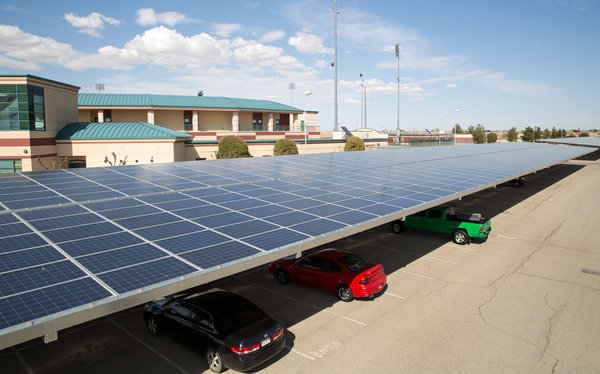
Solar panels on a stadium parking lot in Lancaster Photo: Monica Almeida for The new York Times Source: www.nytimes.com

Solar panels on a stadium parking lot in Lancaster
Photo: Monica Almeida for The new York Times
Source: www.nytimes.com

LANCASTER, Calif. — There are at least two things to know about this high desert city. One, the sun just keeps on shining. Two, the city’s mayor, a class-action lawyer named R. Rex Parris, just keeps on competing.

Two years ago, the mayor, a Republican, decided to leverage the incessant Antelope Valley sun so that Lancaster could become the solar capital “of the world,” he said. Then he reconsidered. “Of the universe,” he said, the brio in his tone indicating that it would be parsimonious to confine his ambition to any one planet.

“We want to be the first city that produces more electricity from solar energy than we consume on a daily basis,” he said. This means Lancaster’s rooftops, alfalfa fields and parking lots must be covered with solar panels to generate a total of 126 megawatts of solar power above the 39 megawatts already being generated and the 50 megawatts under construction.

To that end, Lancaster just did what former Gov. Arnold Schwarzenegger failed to do in 2006: require that almost all new homes either come equipped with solar panels or be in subdivisions that produce one kilowatt of solar energy per house. He also was able to recruit the home building giant KB Home to implement his vision, despite the industry’s overall resistance to solar power.

“Lancaster is breaking new ground,” said Michelle Kinman, a clean energy advocate at Environment California, a research and lobbying group. Ms. Kinman, who tracks the growth of solar energy in the state, calculates that the city tripled the number of residential installations in the past 18 months. […]

Read the original story

Slide show

Top 5 des bars sur les toits de New York

nyhabitat.com, 12 septembre 2012

Le Iris & B. Gerald Cantor Roof Garden Source: www.metmuseum.org

Le Iris & B. Gerald Cantor Roof Garden
Source: www.metmuseum.org

A New York, tout est toujours un peu plus extravagant et imposant qu’ailleurs. Les buildings sont plus hauts, les magasins plus grands et la ville elle-même ne peut être comparée avec aucune autre. Il n’est donc pas surprenant de voir qu‘il en va de même pour la vie nocturne.

La ville de New York fourmille de boîtes de nuits spectaculaires, de lounges et de bars. Le plus impressionnant est sans doute que quelques uns des meilleurs bars et terrasses ne se trouvent pas au niveau de la mer, mais dans les airs ! Si il y a quelque chose qui manque à Manhattan, c’est l’espace, et c’est là que les bars sur les toits new-yorkais entrent en jeu. Ces bars occupent souvent toute la longueur du toit, utilisant l’espace disponible, et disposent même de patios où vous pouvez vous rafraîchir pendant l’été, loin au dessus des rues de la ville. Au fil des ans, beaucoup de ces bars sont apparus aux quatre coins de la ville.

Pour vous aider à trouver les meilleurs bars de New York, nous avons élaboré un Top 5 des meilleurs rooftop bars de Manhattan !

[Read more…]

Energie positive, du bâtiment au territoire, l’utopie réalisable ?

Interview avec Franck Boutté

Propos recueillis par EMMANUELLE BORNE, lecourrierdelarchitecte.com, 23 mars 2011

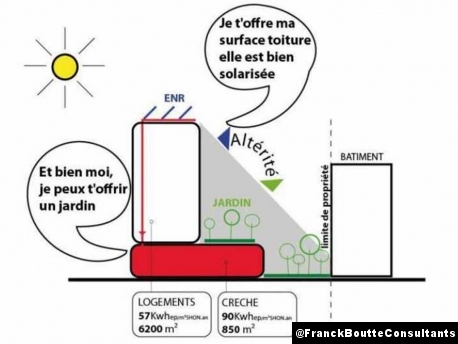
Image: Frank Boutté Consultants Source: www.lecourrierdelarchitecte.com

Image: Frank Boutté Consultants
Source: www.lecourrierdelarchitecte.com

Au-delà du BBC, le BEPOS. Au-delà du BEPOS, le ‘TEGPOS’. Le concept, inventé par Franck Boutté, ingénieur spécialiste de la question environnementale*, «repose sur l’idée d’un nouveau contrat social, fondé sur le partage des ressources». Une utopie ? A Bordeaux, la «philosophie» semble promise à réalisation. Une révolution donc. Explications.

Pour s’y retrouver :

  • BBC : Bâtiments Basse Consommation
  • BEPOS : Bâtiments à Energie positive
  • TEGPOS : Territoire à Energie Globale Positive

Le Courrier de l’Architecte : Vous reprochez à la RT 2012, c’est-à-dire aux BBC, ainsi qu’aux BEPOS d’être trop focalisés sur l’échelle du bâtiment, au détriment du réseau, de la ville. Comment votre TEGPOS remédie-t-il à cette limitation ?

Franck Boutté : Le BEPOS tend à créer un modèle architectural autarcique. Parce qu’il a besoin des ressources de son environnement, il oblige à une mise à distance vis-à-vis des autres bâtiments ; il est donc très difficilement compatible avec la ville existante tout en figeant l’évolution urbaine. Un BEPOS, installé aujourd’hui dans une situation urbaine ‘bien née’, avec accès au soleil, au vent, à la lumière et au sol, ne pourra rester ‘positif’ que s’il demeure isolé, seul dans sa bulle de ressources. Sinon, le BEPOS peut rapidement devenir BENEG, Bâtiment à énergie négative, ce qui est contre-environnemental.

[Read more…]