From the Blog

High-rise urban farming

by AFP Relaxnews, The Star Online, January 13, 2014
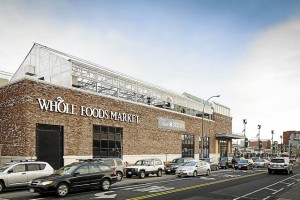
Rooftop farming at Whole Foods Market in Brooklyn Photo: Gotham-Greens / AFP Source: www.thestar.com.my

Rooftop farming at Whole Foods Market in Brooklyn
Photo: Gotham-Greens / AFP
Source: www.thestar.com.my

Agriculture reaches for the skies in New York’s pioneering commercial greenhouse atop a supermarket.

Will supermarkets soon be growing their own produce on the roof? It might sound unusual, but it could be the future of the food commerce industry as the urban farming trend goes high-rise and spreads to metropolises all over the world.

One of the latest companies to test out the concept is global chain Whole Foods, which opened its first Brooklyn location Third and 3rd last month, featuring a 20,000-square foot (about 1,860sq m) greenhouse on the roof.

Designed, built and operated by urban agricultural specialist Gotham Greens, the project is thought to be the first commercial-sized greenhouse integrated into a supermarket.

The greenhouse will produce over 200 tonnes of fresh produce, including leafy greens and tomatoes, per year, and recirculating irrigation systems will capture water for re-use. It is the second New York construction by Gotham Greens, following a 15,000-square foot (about 1,400sq m) rooftop greenhouse built by the company in 2010.
[Read more…]

Chatsworth’s rooftop additions take a beating at landmarks

by TOBIAS SALINGER, Curbed NY, January 8, 2014

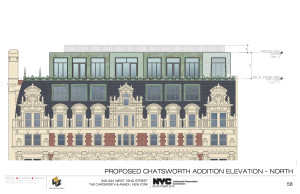
Proposed Chatsworth addition elevation North Image: Montroy Andersen Demarco Source: www.nyc.com

Proposed Chatsworth addition elevation North
Image: Montroy Andersen Demarco
Source: www.nyc.gov

Developer HFZ Capital picked up the iconic Chatsworth apartments at 340 West 72nd Street for a cool $150 million in 2012 and announced plans for a penthouse addition in October. Yesterday, representatives for the developer shared with the Landmarks Preservation Commission the plans by Montroy Anderson Demarco for two new floors atop the main building of the 1904 Beaux Arts structure and one extra floor on its annex building next door. But the team pushing for the rooftop additions, an external facelift for the façade, 24 new windows, and extra entrances could only sit and watch in silence as a dozen community members and preservation advocates bashed the design and representatives for three elected officials registered their bosses’ disapproval. The commissioners pointed out that it’s even more difficult to get approval for work on an individually landmarked building. “That really says to me that we need to scrutinize any changes more carefully,” said Commissioner Elizabeth Ryan of that designation.

[Read more…]

Vegies with a higher purpose

by INDIRA NAIDOO, The Sydney Morning Herald, December 29, 2013

The Big Apple’s hotels are sprouting gardens.

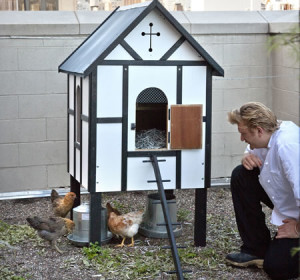
Crosby St Hotel chef Anthony Paris checks the chooks Source: www.firmdalehotels.com

Crosby St Hotel chef Anthony Paris checks the chooks
Source: www.firmdalehotels.com

You know the grow-your-own movement has crossed over into the mainstream when some of New York’s hottest hotels start growing vegies on their roofs.

More than 20 Manhattan hotels now have productive rooftop vegetable gardens. Some have their own beehives producing honey – and some even have chickens laying eggs.

So why give vegie patches million-dollar views in a city where real estate is at a premium?

The trend is two-fold: travellers are expecting more organic, seasonal and local ingredients on hotel menus. And when a hotel guest wants to know the provenance of the food, it doesn’t get any more local than this. Rooftop herbs and vegetables aren’t bruised by transportation and storage, and retain more of their nutrients. And the hotels limit their carbon footprint.

There are financial benefits as well. Green roofs reduce heating and cooling cost for large buildings and mitigate against rain and stormwater damage.

Here’s a look at four New York hotels with impressive gardens.

[Read more…]

Elevated park at trade center site comes into view

by DAVID W. DUNLAP, The New York Times, November 20, 2013

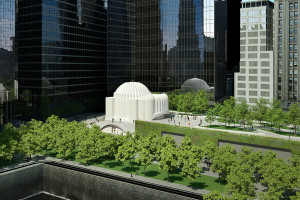
A rendering of the new St. Nicholas Greek Orthodox Church, with conceptual images of a landscaped open space known as Liberty Park Image: Santiago Calatrava Source: www.nytimes.com

A rendering of the new St. Nicholas Greek Orthodox Church, with conceptual images of a landscaped open space known as Liberty Park
Image: Santiago Calatrava
Source: www.nytimes.com

The World Trade Center’s best-kept secret has finally come to light.

It is an elevated park, slightly larger than an acre and 25 feet above Liberty Street, that will command a panoramic view of the National September 11 Memorial when it opens to the public, probably in 2015.

Liberty Park, as it is called, is meant to offer a pleasant and accessible east-west crossing between the financial district and Battery Park City; to create a landscaped forecourt for the new St. Nicholas Greek Orthodox Church; to provide a gathering space for as many as 750 people at a time; to allow visitors to contemplate the whole memorial in a single sweeping glance from treetop level; and to serve as the roof of the trade center’s vehicle security center.

For the moment, the park is an empty concrete expanse. The pedestrian bridge over West Street that will connect it to Battery Park City — the bridge that survived the Sept. 11 attack — currently falls several yards short of its future landing spot.

While the general outlines of the park have been known for years, the Port Authority of New York and New Jersey has been sparing in its public discussion of the project, in part because not every detail of its design and construction has been settled.

But the Port Authority’s hand was forced somewhat last month when sumptuous images of St. Nicholas Church and Liberty Park appeared on the website of the architect Santiago Calatrava, who is designing the church. The park was rendered in sufficient detail that it was possible for the first time to understand its basic design. […]

Read the full story

Related articles :
Church Near Trade Center to Echo Landmarks of East
First Look: Santiago Calatrava’s Design for St. Nicholas Church

The Empire State Building gets a huge green roof!

by BETH BUCZYNSKI, EarthTechling, October 1st, 2013

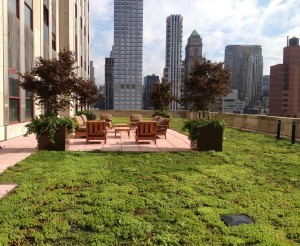
Green roof on the 21st floor
Photo: Xero Flor
Source: www.earthtechling.com

The Empire State Building, an architectural icon in New York City and beyond, just took a giant step forward in its quest to reduce energy consumption. The ‘World’s Most Famous Office Building’ now boasts four green roof systems, totally nearly 10,000 square feet.

For its green roof upgrade, the Empire State Building chose to install the Xero Flor Green Roof System for four rooftop areas: 21st floor east (3,450 square feet), 21st floor west (3,450 square feet), 25th floor northwest (1,000 square feet) and 30th floor west (1,200 square feet). The green roofs on the 21st floor feature rooftop patios with outdoor furniture for the enjoyment of office tenants.

As we’ve reported in the past, the Empire State Building is on a quest to become the most sustainable office building in America. In 2011, the building’s owners announced that they would purchase 100 percent of its power from renewable sources and then embarked on a massive retrofit plan that would earn the Empire State Building LEED Gold.

[Read more…]

Seeing green: Urban agriculture as green infrastructure

by CASSIM SHEPARD, Urban Omnibus, February 1st, 2012

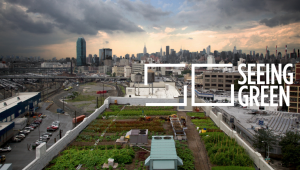
Image: Seein Green Source: www.urbanomnibus.net

Image: Seeing Green
Source: www.urbanomnibus.net

It’s easy to list the reasons why we are supposed to love urban agriculture: the food it yields is fresh and local; the farming it requires is fun and social; the effect on neighborhoods is revitalizing and healthy. Critics point to its inability to replace existing production and distribution channels for produce, but what if its impact extended beyond the small farm or immediate community? What if it could solve other problems? One of New York’s greatest environmental challenges is its combined sewage overflow (CSO) problem. Our outdated sewer system is designed to collect stormwater runoff, domestic sewage, and industrial wastewater in the same pipe on its way to a sewage treatment plant. When the rain is heavy, though, volume exceeds capacity and untreated wastewater flows right into our waterways. Green infrastructure is a term that refers to a wide range of technologies and systems to improve water quality through the capture and reuse of stormwater. But the policies that incentivize green infrastructure and those that govern urban agriculture are not coordinated. In some cases, urban agriculture is actively excluded from official definitions of green infrastructure. In an effort to support farming in the city and help scale it up, Tyler Caruso and Erik Facteau set out to prove scientifically the environmental benefits of rooftop and other urban farms, in particular their ability to manage stormwater, with their research project Seeing Green. In describing this project, Caruso and Facteau touch on issues that range from the effect of scientific research on public policy, the shift towards a definition of sustainability that includes performance alongside design, and the need to layer different registers of analysis in efforts to bring about a city that is more responsive to natural systems. […]

Read the original story