From the Blog

Compte rendu de visite: Fermes Lufa Farms

par SABRI BENDIMERAD, 16 mars 2013
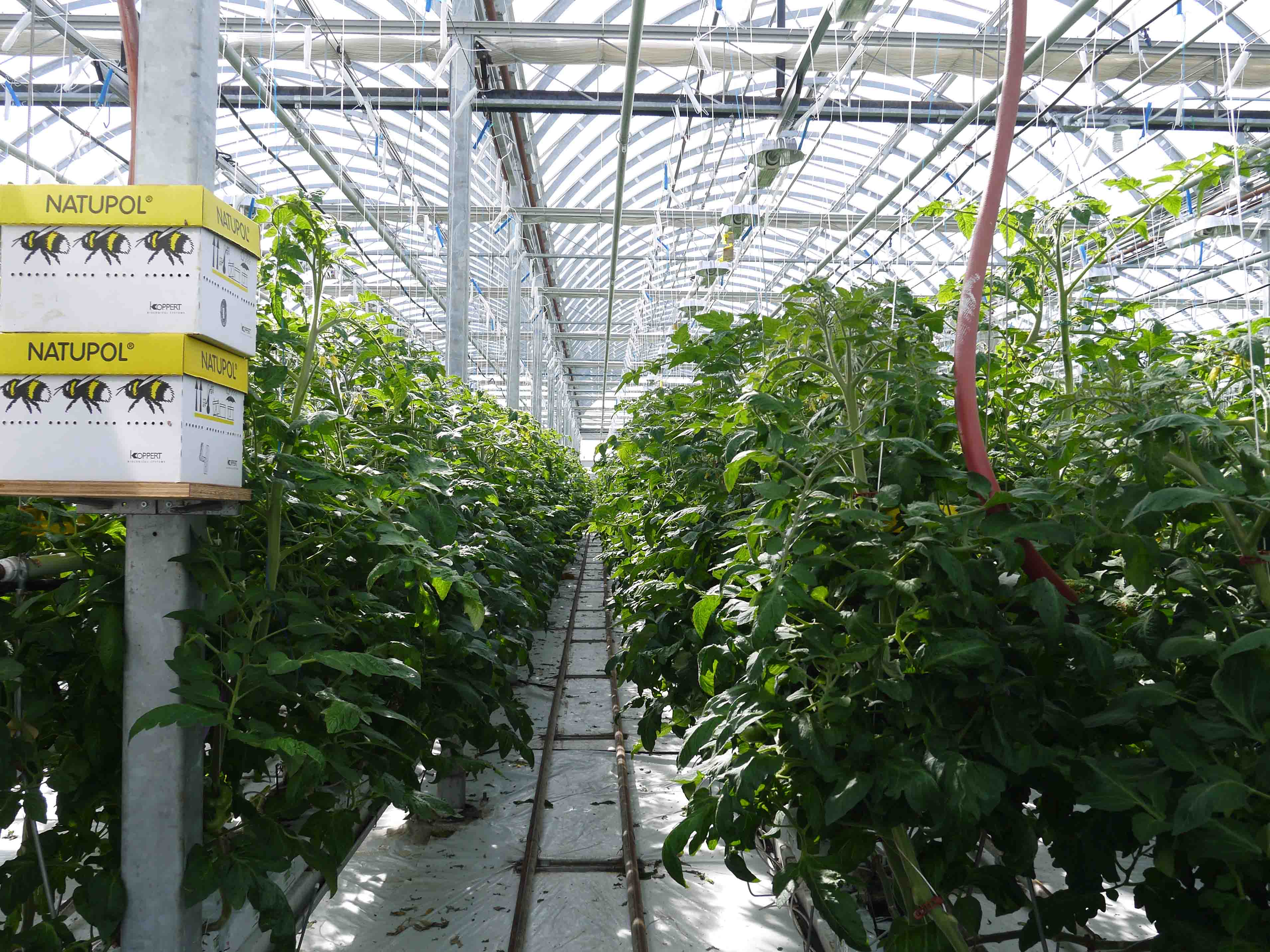
Les Fermes Lufa, intérieur d'une serre Photo: Sabri Bendimérad

Les Fermes Lufa, intérieur d’une serre
Photo: Sabri Bendimérad

Visite des Fermes Lufa à Montréal, Mars 2013
Participants: Alena Prochazka et Sabri Bendimérad

Galerie de photo

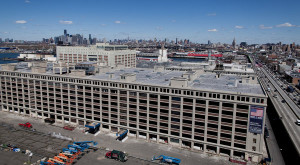
Les Fermes Lufa proposent des paniers hebdomadaires d’assortiments de légumes saisonniers pour des particuliers ou des collectivités, produits dans des serres sur les toits d’un immeuble commercial d’une surface de 31000 pieds carrés. Elles se trouvent dans un quartier d’entrepôts et de grands bâtiments logistiques à Montréal. On y trouve aussi bien du commerce de gros de fruits et légumes que de la vente de meubles de salon kitch… Le quartier est une enclave bordée par un grand boulevard. Le stationnement des véhicules occupe l’espace vide laissé entre les bâtiments. Ceux-ci sont en béton préfabriqués ou en brique. Le réseau électrique est visible comme dans n’importe quelle zone industrielle d’Amérique du Nord On cherche l’entrée. Sur le côté, en face de la rue ou sur le boulevard ? L’occasion de voir les serres sous tous les angles. De l’extérieur, celles-ci coiffent le bâtiment de brique, rappelant les logements construits pour la cité manifeste de Mulhouse par Anne Lacaton et Jean-Philippe Vassal. Les plaques des sociétés s’affichent sans distinction typographique : au 2ème étage, se situent les Lufa Farms, inc. ! Un escalier mène à un étage où l’on trouve l’accueil, le conditionnement et l’expédition ainsi que des bureaux dans une grande salle où des cagettes vides font office de décor. La visite est impromptue mais nous sommes accueillis par une personne qui nous conduit aux serres.
[Read more…]

Un appel à projets pour végétaliser Paris

lemoniteur.fr, 29 mars 2013

La Ville de Paris s’associe au Paris Région Lab pour lancer un appel à projets dédié à la végétalisation innovante. Elle invite les entreprises et associations à venir expérimenter en grandeur nature leurs solutions expérimentales dans les domaines de la biodiversité, de l’agriculture urbaine et de l’adaptation de la ville au changement climatique. Celles-ci pourront tester leurs prototypes dans l’espace public et sur les bâtiments, pendant une durée pouvant atteindre 3 ans.

Suivant les objectifs du Plan Biodiversité, du Plan Climat Energie et du Livre Bleu de la Ville de Paris, cet appel à projets a pour but d’encourager et d’accompagner des expérimentations en matière de végétalisation qui permettront aux espèces animales et végétales de s’établir de manière durable, qui participeront à lutter contre les îlots de chaleur et contribueront au rafraîchissement de la ville et au rapprochement entre producteurs et consommateurs.

[Read more…]

In the book bag, more garden tools

by LISA W. FODERARO, The New York Times, November 23, 2012

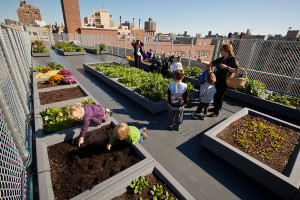
Children at the 2,400-square-foot Fifth Street Farm, a garden atop three East Village schools Photo: Ángel Franco Source: The New York Times

Children at the 2,400-square-foot Fifth Street Farm, a garden atop three East Village schools
Photo: Ángel Franco for The New York Times
Source: The New York Times

In the East Village, children planted garlic bulbs and harvested Swiss chard before Thanksgiving. On the other side of town, in Greenwich Village, they learned about storm water runoff, solar energy and wind turbines. And in Queens, students and teachers cultivated flowers that attract butterflies and pollinators.

Across New York City, gardens and miniature farms — whether on rooftops or at ground level — are joining smart boards and digital darkrooms as must-have teaching tools. They are being used in subjects as varied as science, art, mathematics and social studies. In the past two years, the number of school-based gardens registered with the city jumped to 232, from 40, according to GreenThumb, a division of the parks department that provides schools with technical support.

But few of them come with the credential of the 2,400-square-foot garden at Avenue B and Fifth Street in the East Village, on top of a red-brick building that houses three public schools: the Earth School, Public School 64 and Tompkins Square Middle School. Michael Arad, the architect who designed the National September 11 Memorial in Lower Manhattan, was a driving force behind the garden, called the Fifth Street Farm.

The idea took shape four years ago among parents and teachers, when Mr. Arad’s son was still a student at the Earth School. The family has since moved from the neighborhood to Queens, but Mr. Arad, president of a nonprofit corporation that oversaw the garden, stayed on. The farm, with dozens of plants ranging from leeks to lemon balm, opened Oct. 19. Already, students have learned about bulbs and tubers, soil science and nutrition, while the cafeteria has cooked up fresh kale and spinach for lunch.

Read the article…

In organic-hungry Hong Kong, corn as high as an elevator’s climb

by MARY HUI, The New York Times, October 3, 2012

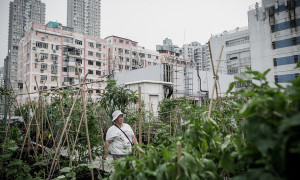
Plots like the rooftop City Farm are sprouting across Hong Kong amid fears of tainted imports Photo: Philippe Lopez (Agence France-Presse) Source: The New York Times

Plots like the rooftop City Farm are sprouting across Hong Kong amid fears of tainted imports
Photo: Philippe Lopez (Agence France-Presse)
Source: The New York Times

HONG KONG — Kimbo Chan knows all about the food scandals in China: the formaldehyde that is sometimes sprayed on Chinese cabbages, the melamine in the milk and the imitation soy sauce made from hair clippings. That is why he is growing vegetables on a rooftop high above the crowded streets of Hong Kong.

“Some mainland Chinese farms even buy industrial chemicals to use on their crops,” Mr. Chan said. “Chemicals not meant for agricultural uses at all.”

As millions of Hong Kong consumers grow increasingly worried about the purity and safety of the fruits, vegetables, meats and processed foods coming in from mainland China, more of them are striking out on their own by tending tiny plots on rooftops, on balconies and in far-flung, untouched corners of highly urbanized Hong Kong.

“Consumers are asking, will the food poison them?” said Jonathan Wong, a professor of biology and the director of the Hong Kong Organic Resource Center. “They worry about the quality of the food. There is a lack of confidence in the food supply in China.”

Organic food stores are opening across the city, and there is growing demand in the markets for organic produce despite its higher prices. There are about 100 certified organic farms in Hong Kong. Seven years ago, there were none.

There is no official count of rooftop farms in Hong Kong, but they are clearly part of an international trend. New York has many commercialized rooftop farms established by companies like Gotham Greens, Bright Farms and Brooklyn Grange. In Berlin, an industrial-size rooftop vegetable and fish farm is in the pipeline. In Tokyo, a farm called Pasona O2 takes urban farming a step further: Vegetables are grown not only on roofs, but also in what was an underground bank vault. […]

Read the original story

See also:


Huge rooftop farm is set for Brooklyn

LISA W. FODERARO, The New York Times, April 5, 2012

An old Navy warehouse in Sunset Park will be home to a hydroponic greenhouse of up to 100,000 square feet. The developer says it will be the largest such greenhouse in the country Photo: Eric Michael Johnson for The New York Times Source: The New York Times

An old Navy warehouse in Sunset Park will be home to a hydroponic greenhouse of up to 100,000 square feet. The developer says it will be the largest such greenhouse in the country
Photo: Eric Michael Johnson for The New York Times
Source: The New York Times

Brooklyn is fast becoming the borough of farms. On Thursday, Bright Farms, a private company that develops greenhouses, announced plans to create a sprawling greenhouse on a roof in Sunset Park that is expected to yield a million pounds of produce a year — without using any dirt.

The hydroponic greenhouse, at a former Navy warehouse that the city’s Economic Development Corporation acquired last year, will occupy up to 100,000 square feet of rooftop space. Construction is scheduled to start in the fall, with the first harvest expected next spring.

When finished, the greenhouse will rank as the largest rooftop farm in the United States — and possibly the world, Bright Farms officials say. This spring, Brooklyn Grange, another rooftop farm developer, is set to open a 45,000-square-foot commercial operation at the Brooklyn Navy Yard.

“Brooklyn was an agricultural powerhouse in the 19th century, and it has now become a local food scene second to none,” said Paul Lightfoot, the chief executive of Bright Farms. “We’re bringing a business model where food is grown and sold right in the community.”

Mr. Lightfoot said that the company was in talks with supermarket chains that would potentially commit to buying produce from the Sunset Park farm, which will include a variety of lettuces, tomatoes and herbs. “We’re looking for a long-term contract with one client who operates grocery stores,” he said.

Read the article…

Challenging the reputation of hospital food on a rooftop farm

by ANEMONA HARTOCOLLIS, The New York Times, October 18, 2012

At Stony Brook University Hospital, a farm has been a team effort. Interns like Nadeem Marghoob plant and harvest the crops Photo: Uli Seit for The New York Times Source: The New York Times

At Stony Brook University Hospital, a farm has been a team effort. Interns like Nadeem Marghoob plant and harvest the crops
Photo: Uli Seit for The New York Times
Source: The New York Times

STONY BROOK, N.Y. — The weather report said the first frost was coming, and the farmer and her three helpers skittered around the rooftop garden snipping the tenderest plants — basil, green peppers, a few heirloom tomatoes — so they would not be ruined. Over the next few days, they would be chopped into sauces and garnishes and served up in covered dishes by room service waiters wearing dapper black suits.

But this was not a hotel in the more trendy precincts of Manhattan or San Francisco. It was Stony Brook University Hospital, in the middle of Suffolk County, Long Island, where a rooftop farm is feeding patients and challenging the reputation of hospital food as mushy, tasteless and drained of nutrients. (No, Jell-O is not growing on the roof.) But the sick, who have bigger problems than whether their broccoli is local and sustainable, can be tough customers.

“Swiss chard went over well, kale maybe not so much,” said Josephine Connolly-Schoonen, executive director of the nutrition division at the hospital. “When people are not feeling well, they want their comfort foods.”

Hundreds of hospitals across the country host a farmer’s market, have a garden on their grounds that supplies fresh produce or buy at least some of their food from local farms, ranches and cooperatives, according to a survey by Health Care Without Harm, an international coalition of health care groups.

Read the article…