From the Blog

Détroit: l’agriculture urbaine, antidote à la désindustrialisation ?

par SOPHIE CHAPELLE, alter-echos.org, 15 mai 2013

Après Montréal (Québec), Rosario (Argentine), Rio de Janeiro (Brésil), Milwaukee et Denver (Etats-Unis), Alter-Echos (www.alter-echos.org) poursuit son tour d’horizon des expériences d’agriculture urbaine avec Détroit, symbole international de l’industrie automobile américaine. Mais aussi « symbole de la post-industrialisation » d’après Grace Lee Boggs, depuis que ses habitants essaient de réinventer leur ville à partir de l’agriculture urbaine et de l’autosuffisance alimentaire.

[Read more…]

Brooklyn’s urban beekeepers

Breaking The Law For The Planet (part I)

by LIZA DE GUIA, food. curated., August 9, 2009

Source: food. curated.


“Watch Out Ladies” Honey Harvest (Part II)

by LIZA DE GUIA, food. curated., August 21, 2009

Source: food. curated.


At Met, park views big and small

by CAROL VOGEL, The New York Times, May 10, 2013

Source: www.metmuseum.org

Source: www.metmuseum.org

In 1998 when Ellsworth Kelly became the first living artist to exhibit on the roof of the Metropolitan Museum of Art, he called the picture-postcard setting “an instant background.” When his sculptures — as tall as 14 feet — were installed there they looked enormous and the skyscrapers behind them tiny. Mr. Kelly compared this reversal of scale to Chinese landscape painting in the way it played with perspective.

This year’s exhibition on the Met’s roof garden, which opens Tuesday, is also a study in perspective, but this time the beauty and impact will be the diminutive nature of its creation. The Pakistani artist Imran Qureshi, who is known for his painstaking brushwork in the style of the 16th- and 17th-century Mughal miniaturists, is conceiving a site-specific painting that will be directly on the surface of the roof garden. His creation will relate not only to some of his earlier work, but also to the nature he has discovered in Central Park, whose vistas are an integral part of the setting. (Through Nov. 3, 212-535-7710, metmuseum.org)

 Read the original story


The Roof Garden Commission: Imran Qureshi

Source: The Metropolitan Museum of Art

Other story about the installation : Savagery, Mulled in Airy Precincts

La vie autrement: Un potager expérimental sur les toits de Paris

Chronique de Pauline Lefèvre, La Nouvelle Edition du 9 mai 2013


Kowloon walled city: Life in the city of darkness

by JOHN CARNEY, South China Morning Post, April 15, 2013

It’s 20 years since demolition of Kowloon Walled City began, but former residents hold fond memories of the overcrowded slum they called home.

It was called a lawless twilight zone by some and the world’s most overcrowded squat by others. But to many, the Kowloon Walled City was simply home.

This month marks 20 years since work started to wipe away one of the most striking features of the Hong Kong landscape for good.

A 2.7-hectare enclave of opium parlours, whorehouses and gambling dens run by triads, it was a place where police, health inspectors and even tax collectors feared to tread.

In Cantonese, it was known as the City of Darkness.

[Read more…]

Chicago: America’s green city

by JAMES CONAWAY, National Geographic Traveler, September 2010 issue

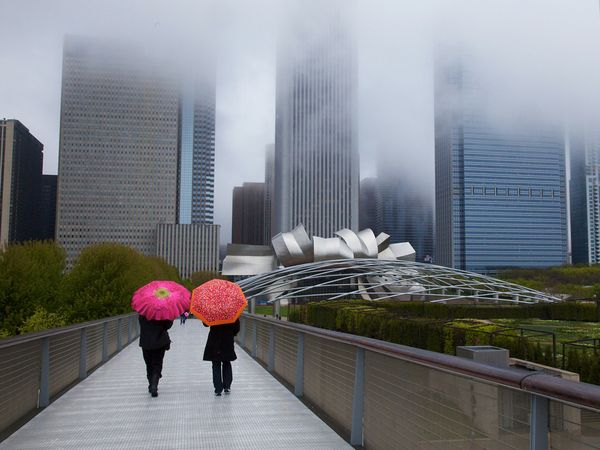
The Nichols Bridgeway extends over the world's largest green roof to Millennium Park Photo: Melissa Farlow Source: www.travel.nationalgeographic.com

The Nichols Bridgeway extends over the world’s largest green roof to Millennium Park
Photo: Melissa Farlow
Source: www.travel.nationalgeographic.com

From aging industrial capital to model of livability and environmental stewardship, Chicago is becoming our kind of town.

Phil Ponce, local TV news anchor, peers at the amazing array of sausages dangling from overhead racks in Gene’s Deli in north Chicago’s Lincoln Square. “Chicago’s not the city of big shoulders,” he jokes, referring to poet Carl Sandburg’s early-20th-century characterization of what was then America’s industrial capital, “but rather the city of pig shoulders.” (And that refers not just to actual pork, he later explains, but also to the long line of Chicago politicians convicted of taking bribes.)

It’s Sunday afternoon, and the sidewalks are jammed in this longtime enclave of sausage-loving Germans and Eastern Europeans. Recent years have seen a growing ethnic diversity among residents, as well as an influx of shops and galleries. Yet, a steel archway labeled “Lincoln Square” lets the world know that pride in the neighborhood—pig shoulders and all—is stronger than ever.

“A few years ago people here decided they didn’t want big developments,” Ponce says, explaining that condos were prevented from taking over the local movie theater, though locals welcomed new residents moving into renovated apartments. “There are more than 50 neighborhoods in Chicago just as distinct and as cherished as this one,” he adds, vital components in the overall good vibe of this historic Midwestern metropolis.

[Read more…]