From the Blog

Rooftop farm produces up to 10 times more than traditional farms

by EILEEN POH, Channel NewsAsia, February 14, 2014

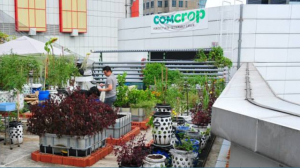
Comcrop is a vegetable and fish farm located on the rooftop of *SCAPE. (Photo: Photo: Comcrop Source: www.channelnewsasia.com

Comcrop is a vegetable and fish farm located on the rooftop of *SCAPE.
Photo: Comcrop
Source: www.channelnewsasia.com

Tucked away in the heart of Orchard Road is a vegetable and fish farm called Comcrop located on the rooftop of *SCAPE. With 6,000 square feet of space, it can produce eight to 10 times more than traditional farms over the same area by using vertical farming techniques.
Tucked away in the heart of Orchard Road is a uncommon sight for Singapore’s main shopping belt.

A vegetable and fish farm called Comcrop is located on the rooftop of *SCAPE.

With 6,000 square feet of space, it can produce eight to 10 times more than traditional farms over the same area by using vertical farming techniques.

The farm also uses aquaponics, a self-sustaining system that breaks down by-products from tilapia, a type of fish, which are utilised by plants as nutrients. The clean water is then fed back to the plants.
[Read more…]

Brooklyn Grange – A New York growing season

from CHRISTOPHER ST. JOHN, Vimeo, February 9, 2014

A 7-month time lapse documenting the first full growing season at the Brooklyn Grange’s farm in the Brooklyn Navy Yard. At 65,000 square feet, it’s the largest rooftop farm in the world.

Shot and edited by Christopher St. John

View original post

Link to the Brooklyn Grange


High-rise urban farming

by AFP Relaxnews, The Star Online, January 13, 2014

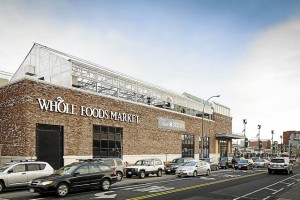
Rooftop farming at Whole Foods Market in Brooklyn Photo: Gotham-Greens / AFP Source: www.thestar.com.my

Rooftop farming at Whole Foods Market in Brooklyn
Photo: Gotham-Greens / AFP
Source: www.thestar.com.my

Agriculture reaches for the skies in New York’s pioneering commercial greenhouse atop a supermarket.

Will supermarkets soon be growing their own produce on the roof? It might sound unusual, but it could be the future of the food commerce industry as the urban farming trend goes high-rise and spreads to metropolises all over the world.

One of the latest companies to test out the concept is global chain Whole Foods, which opened its first Brooklyn location Third and 3rd last month, featuring a 20,000-square foot (about 1,860sq m) greenhouse on the roof.

Designed, built and operated by urban agricultural specialist Gotham Greens, the project is thought to be the first commercial-sized greenhouse integrated into a supermarket.

The greenhouse will produce over 200 tonnes of fresh produce, including leafy greens and tomatoes, per year, and recirculating irrigation systems will capture water for re-use. It is the second New York construction by Gotham Greens, following a 15,000-square foot (about 1,400sq m) rooftop greenhouse built by the company in 2010.

[Read more…]

Légumes et sols contaminés, une cohabitation difficile

par DAPHNÉE HACKER-B., Métro, 31 janvier 2014

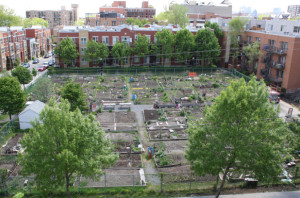
Jardin communautaire Mile End Photo: Josie Desmarais / Métro Source: www.journalmetro.com

Jardin communautaire Mile End
Photo: Josie Desmarais / Métro
Source: www.journalmetro.com

Des 97 jardins communautaires montréalais ensevelis en ce moment sous la neige, mais très populaires en été, 20 ont été identifiés comme ayant des terres dangereusement contaminées. Si les arrondissements ont tenté depuis de pallier le problème de différentes façons, la décontamination a été la solution la moins retenue.

Les potagers situés au sein d’une métropole comme Mont­réal sont directement soumis aux contaminations multiples issues des anciennes activités industrielles. C’est ce qui ressort d’une étude de toxicité des jardins communautaires menée par la Direction de la santé publique de Montréal (DSP), en 2009. Parmi les 20 jardins présentant une problématique de contamination, 9 cas touchent l’ensemble du jardin, tandis que dans les 11 autres, une section du terrain a été identifiée comme contaminée.

Grâce à une mise à jour effectuée par Métro, on constate que sept jardins ont été complètement ou partiellement fermés, tandis que seulement trois ont été décontaminés.

[Read more…]

Angel city brewery raising rooftop hops for special brew

The garden atop Angel City Brewery Photo: Ray Narkevicius Source: www.laweekly.com

The garden atop Angel City Brewery
Photo: Ray Narkevicius
Source: www.laweekly.com

by SEAN J. MILLER, LA Weekly, January 7, 2014

Angel City Brewery is taking the farm-to-table concept to new heights with a rooftop hops garden whose harvest has yielded a unique brew only available in downtown L.A.

The craft brewery’s urban garden is a work in progress, but Dieter Foerstner, Angel City’s brewmaster, expects that by next fall patrons at the Angel City’s public house will be able to enjoy its (copyrighted) “rooftop” brew.

“We’ve played around with some cask beers — beers we’ve already had brewed — and we’ll pitch fresh hops into a cask, let it condition for a week or so and then turn around and sell them traditional-style,” Foerstner says. “By using those fresh hops, you get this really beautiful, almost resinous aroma and really great hops flavor.”

Some breweries use fresh hops in “harvest style” or “wet hop” beers, but those operations are generally located in rural areas, close to the source. For an urban brewery — particularly one located in the country’s second biggest city — growing your own is unique.

[Read more…]

Rooftop gardens are the future of farming

by AL SHAY, Statesman Journal, January 2, 2014

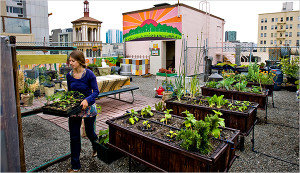
Maya Donelson tends the rooftop garden of Glide Memorial Church in San Francisco Photo: Peter DaSilva for The New York Times Source: www.nytimes.com

Maya Donelson tends the rooftop garden of Glide Memorial Church in San Francisco
Photo: Peter DaSilva for The New York Times
Source: www.nytimes.com

So many of our horticulture students at Oregon State University are enthralled with the thought of becoming organic farmers despite the fact there seems to be an overabundance in the Willamette Valley already.

I encourage them to look at the new urban environment, you know the one that covers only 2 to 3 percent of the earth’s surface but consumes nearly 70 percent of its resources. This particular model also predicts that the urban environment is poised to house and accommodate the needs of seven out of every 10 inhabitants by 2050. I recently examined a rooftop gardening operation on the east coast and was simply amazed at what they are doing.

I was thumbing my way through the 355 page Whole Seed catalog from Baker Creek Heirloom Seeds when an article entitled the Brooklyn Grange Farm caught my attention. It is the largest rooftop farming operation in America. They have two sites, one at the old Brooklyn navy yard and one in Queens, NY. Together there is a combined area of 108,000 square feet. This is nearly 2½ acres from which they produce nearly 20,000 pounds of produce per acre.

[Read more…]